

The Story of Ogoh-Ogoh: A Symbol of Purification in Bali
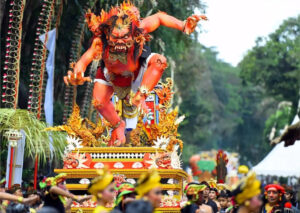
As Nyepi, the Balinese Day of Silence, approaches, the island comes alive with one of its most captivating traditions—the creation and parade of Ogoh-Ogoh. These striking statues, often towering several meters high, are carefully handcrafted by local communities using bamboo, paper, and other traditional materials.
Ogoh-Ogoh represent Bhuta Kala, mythological spirits that symbolize negative forces and imbalanced energies in the world. Their fierce and dramatic forms are intentionally designed to embody chaos, greed, anger, and other human emotions that disturb harmony.
On the eve of Nyepi, during the ritual known as Ngerupuk, these magnificent figures are paraded through the streets accompanied by the powerful rhythms of traditional Balinese music. The lively procession creates an electrifying atmosphere as the statues are carried, rotated, and danced along the roads, symbolically drawing out negative energies.
At the end of the celebration, the Ogoh-Ogoh are traditionally burned or destroyed. This ritual represents the cleansing of negative forces, allowing the island to enter Nyepi in a state of spiritual purity and balance.
Beyond its dramatic spectacle, the Ogoh-Ogoh tradition reflects the Balinese philosophy of maintaining harmony between humans, nature, and the spiritual world. It is also a celebration of community spirit, creativity, and cultural heritage—where art, belief, and tradition unite to welcome a new cycle of peace and reflection.
Leave a comment